Product Description
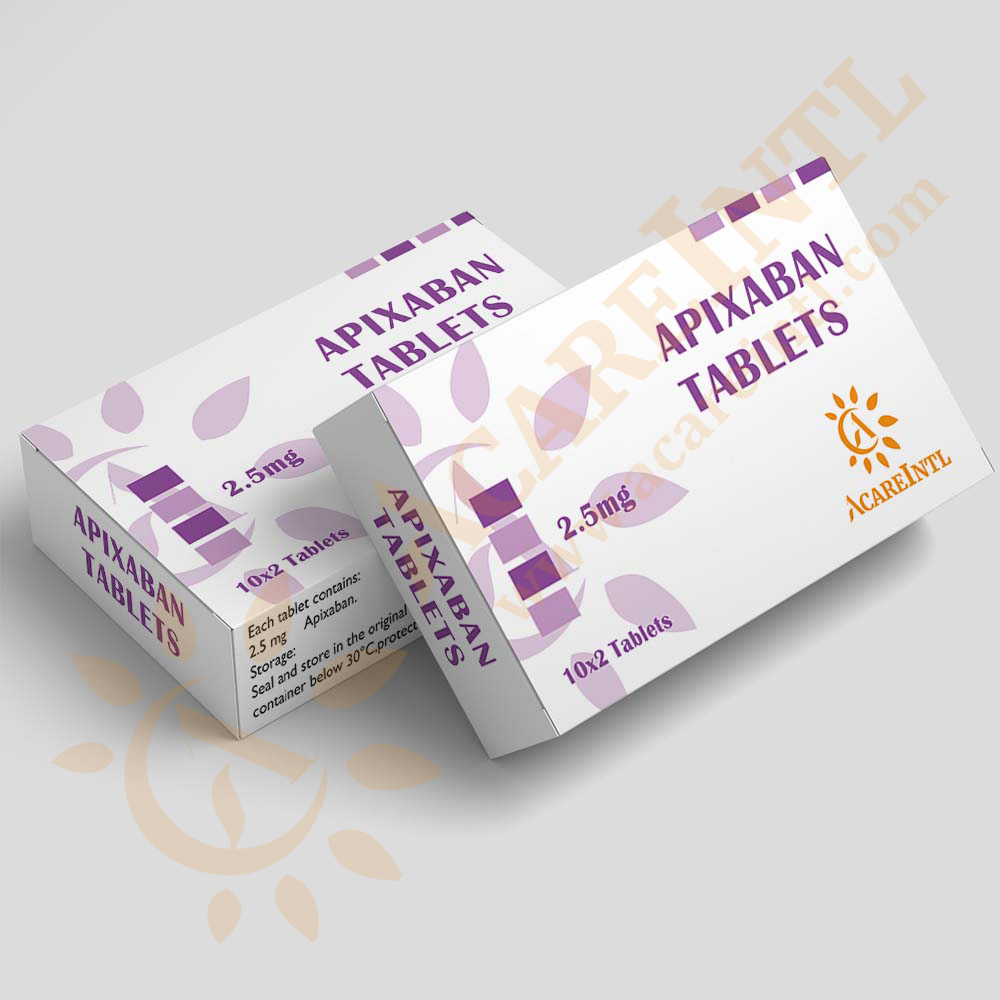
Apixaban is a factor Xa inhibitor anticoagulant indicated for:Reduction of risk of stroke and systemic embolism in patients with nonvalvular atrial fibrillationProphylaxis of deep vein thrombosis (DVT) following hip or knee replacement surgeryTreatment of DVT and pulmonary embolism (PE)Reduction in the risk of recurrent DVT and PE following initial therapy
AI Product Description
*The following content is generated by AI and is for reference only.
Apixaban Tablets, commonly known by the brand name Eliquis, are oral anticoagulants belonging to a class of medications called direct factor Xa inhibitors. Their primary medical purpose is to prevent and treat blood clots in various clinical scenarios. Specifically, they are prescribed to reduce the risk of stroke and systemic embolism in patients with non-valvular atrial fibrillation, a condition characterized by an irregular heart rhythm that can cause blood to pool and clot within the heart. Additionally, Apixaban is indicated for the treatment of deep vein thrombosis (DVT) and pulmonary embolism (PE), as well as for preventing recurrent DVT and PE after initial therapy. It is also utilized for prophylaxis against venous thromboembolism following hip or knee replacement surgeries.
The medication functions by selectively inhibiting Factor Xa, a crucial enzyme in the coagulation cascade, thereby reducing the formation of fibrin clots without significantly affecting platelet function. Unlike warfarin, Apixaban does not require routine monitoring of blood clotting levels, offering a more predictable pharmacokinetic profile. However, its use carries significant safety considerations. The most critical risk associated with Apixaban is bleeding, which can range from minor bruising to life-threatening hemorrhage in the brain or gastrointestinal tract. Patients must immediately report signs such as unusual bleeding, black stools, coughing up blood, or severe headaches.
Contraindications include active pathological bleeding and severe hepatic impairment. Caution is advised when combining Apixaban with other drugs that affect hemostasis, such as aspirin, NSAIDs, or strong P-glycoprotein and CYP3A4 inhibitors. Patients should inform their healthcare providers about all concurrent medications and supplements. Abrupt discontinuation of the drug increases the risk of thrombotic events; therefore, any changes in dosage or cessation must be managed strictly under medical supervision. While Apixaban offers a convenient alternative to traditional anticoagulants, adherence to prescribed dosing and vigilance regarding adverse effects remain paramount for patient safety and therapeutic efficacy.



 (All Rights Reserved)
 Standard Member